HEALTH & SAFETY AT WORK
Near Misses (Safety Guidance Document)
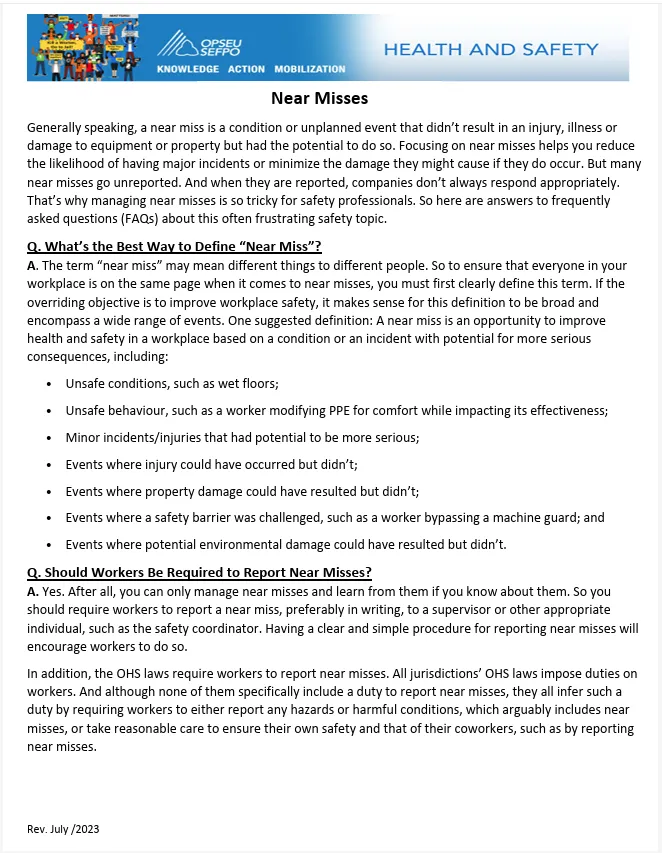
This document explains what near misses are and why reporting them is critical to preventing workplace injuries and incidents.
It provides guidance on identifying, reporting, investigating, and addressing near misses. This helps organizations fix hazards early and improve workplace safety overall.
Office Ergonomics Guide
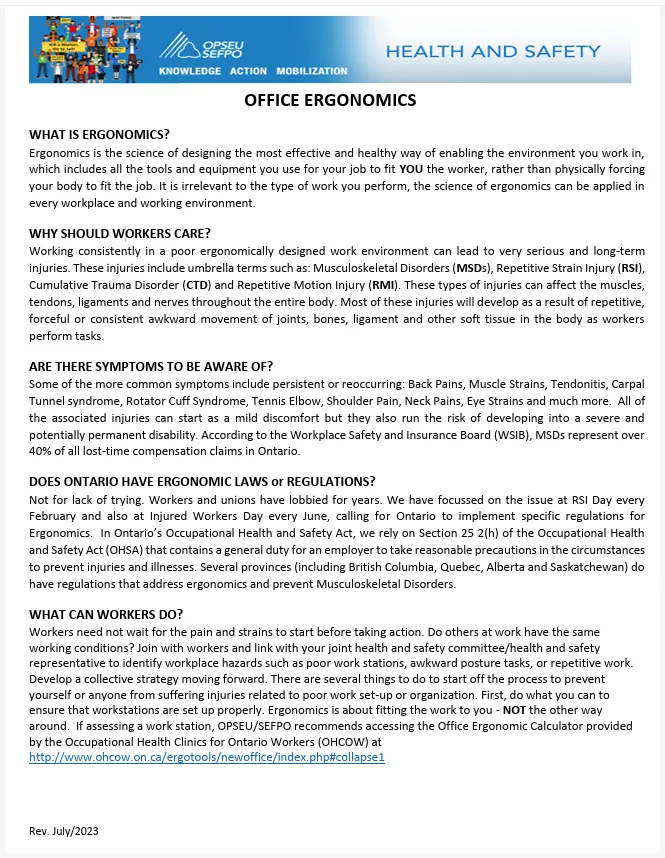
This guide explains how proper office ergonomics helps prevent workplace injuries. It ensures workstations, tools, and equipment fit workers safely and comfortably. It describes common injury risks from poor workstation setup. It lists symptoms to watch for. It also explains actions workers and employers can take.
These steps improve workplace health. They also reduce long-term strain and injury.
From Knowledge to Action

This toolkit is designed primarily for workers in healthcare and mental health environments facing workplace violence risks. It gives practical tools and guidance to help workers understand their rights. It helps them spot violence risks. It also helps them hold employers accountable. Employers must implement effective prevention programs.
The document explains workplace violence terms and examples.
It outlines the employer's duties and the required risk checks.
It describes how to report incidents and concerns.
It explains workers' rights to refuse unsafe work.
It helps workers improve safety through informed action and teamwork.
Violence and Harassment at Work

This resource focuses on preventing and addressing workplace violence and harassment. It stresses that violence results from unsafe workplace conditions. It is not an unavoidable part of work. It outlines legal requirements for employer policies, risk assessments, prevention programs, and reporting procedures.
The guide also describes types of workplace violence and harassment, their impacts on workers, and steps employers must take. It explains how to create safer workplaces and support affected employees.
A Worker's Guide to the Occupational Health and Safety
This clear guide gives workers an overview of Ontario’s Occupational Health and Safety Act (OHSA). It covers worker rights, employer duties, and the role of Joint Health and Safety Committees and safety representatives.
It explains key topics, like the right to know about hazards. It also covers the right to take part in safety processes. It explains the right to refuse unsafe work. The guide also covers enforcement, appeals, legal protections, and recent legislative updates affecting workplace safety across Ontario.
Return to Work Safely (RTW)
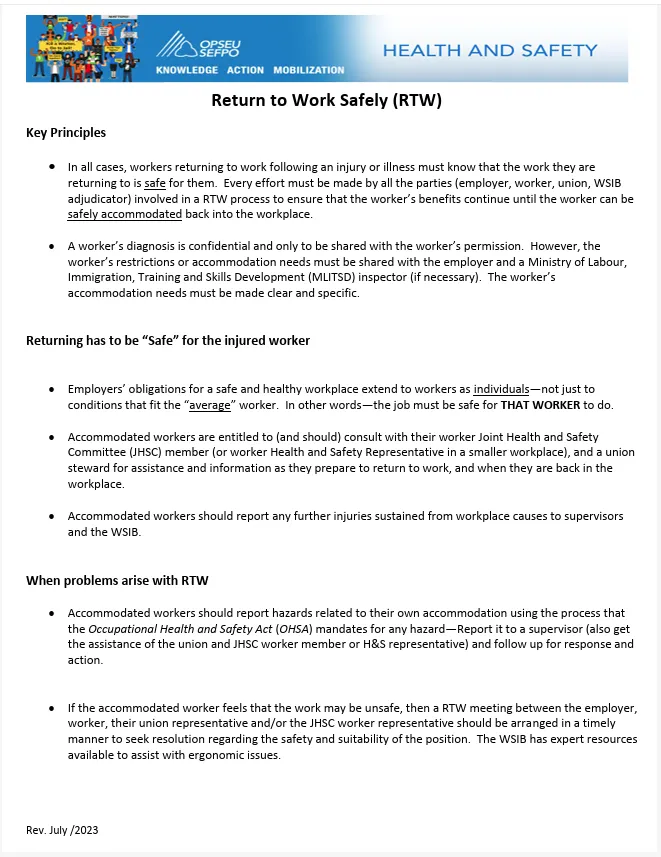
This guide outlines best practices and legal requirements for ensuring workers return to work safely after injury or illness. It emphasizes the importance of accommodation, safe job assignments, and maintaining worker benefits until safe return is possible.
The document also explains worker rights, employer duties, and reporting rules.
It outlines steps to address unsafe accommodations.
This includes the right to raise safety concerns.
Workers may also refuse unsafe work if needed.
Worker Entitlements to H&S Information under the OHSA
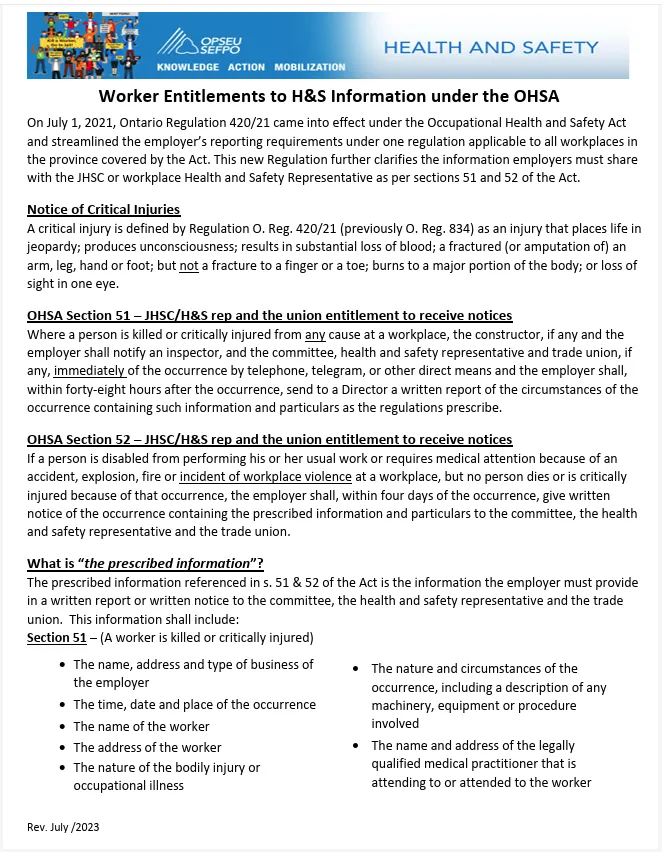
This document explains workers’ and Joint Health and Safety Committees’ rights to get health and safety information.
These rights are under Ontario’s Occupational Health and Safety Act. It outlines employer reporting duties for critical injuries, fatalities, work-related illnesses, and other incidents. It also lists required timelines and details that must be shared.
The guide also explains workers’ rights. Workers can access inspection reports. They can also access investigation results. They can get key information to help prevent future workplace hazards and injuries.
WORKING ALONE
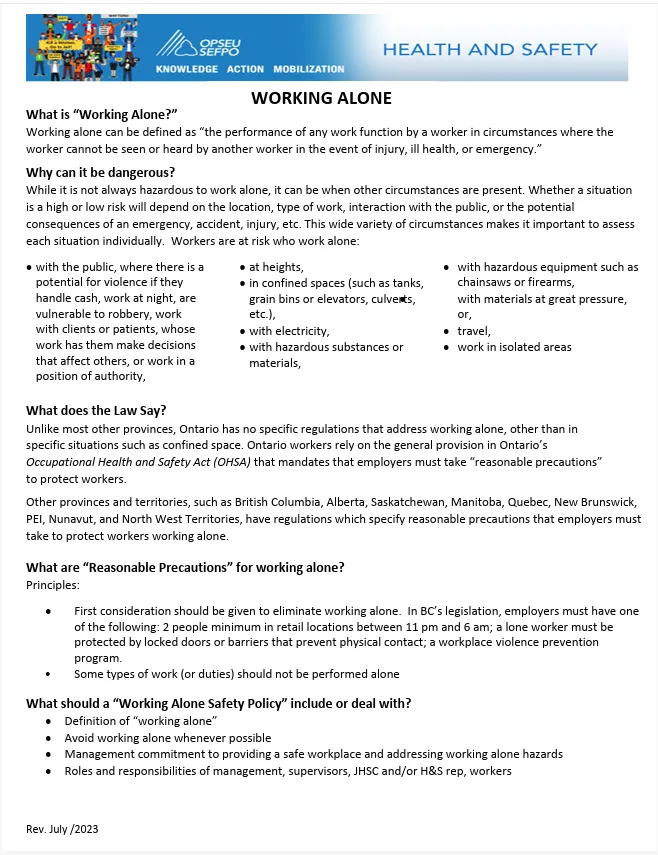
This guide explains the risks of working alone. It also outlines steps employers and workers can take to stay safe. This applies when employees work without direct supervision or immediate help.
It highlights the importance of risk assessments, communication systems, safe work procedures, and training. It helps reduce hazards and protect workers in isolated or higher-risk situations.
OPSEU/SEFPO
OPSEU/SEFPO L464 Office
Tel: (613) 739-4334
Ext. 1: Teresa Van Dongen - Chief Steward (Collective Agreement interpretation)
Ext. 2: Sophie Roy - Local President
Ext. 3: Sara Imadi - Secretary / Return to Work Officer (help with Occupational Health and WSIB)


Copyright ©2026 OPSEU/SEFPO Local 464. All Rights Reserved.